


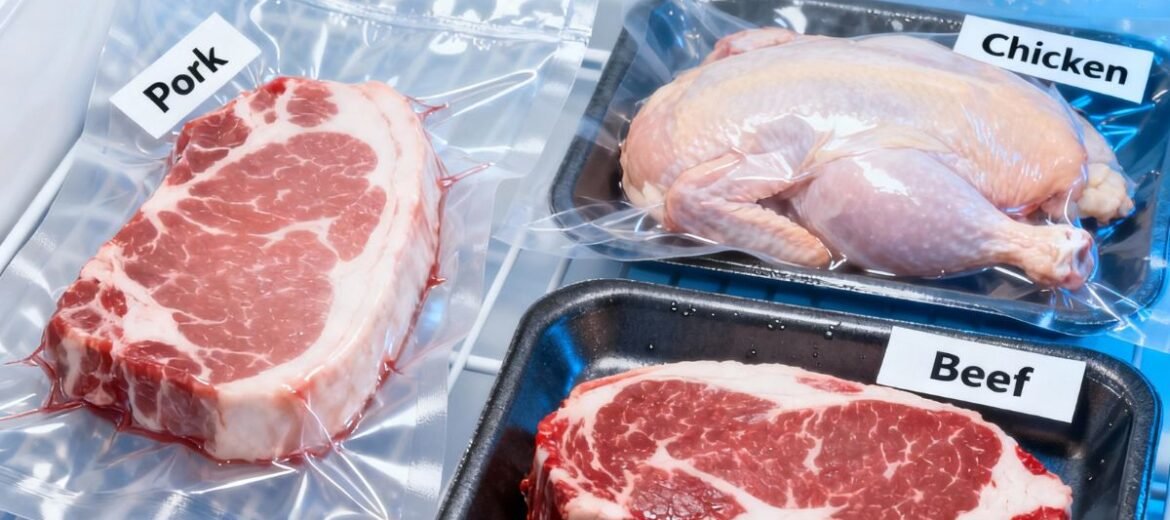
Storing fresh meats in Cold Storage
Proper storage of fresh cutting pieces of meats like pork, chicken, and beef in cold storage or deep freeze is essential to maintain freshness, safety, and quality. The ideal approach is to package these meats in vacuum-sealed or airtight packaging to minimize exposure to air and moisture, which helps prevent freezer burn, dehydration, and microbial growth. Meat should be kept at temperatures close to 0°C (32°F) for refrigerated storage or -18°C (0°F) or lower for freezing to effectively preserve texture, flavor, and shelf life.
Best Practices
Use high-quality airtight or vacuum-sealed packaging to reduce air exposure.
Maintain consistent cold temperatures throughout storage and transport.
Label packaging with date and type of meat for better inventory management.
Avoid overfilling storage units to ensure even freezing and cooling.
Challenges
Temperature Fluctuations: Interruptions in cold chain or frequent door openings can cause temperature rises, accelerating spoilage and compromising quality.
Freezer Burn: Improper packaging or loose seals allow moisture loss, causing surface dehydration and off-flavors.
Microbial Growth: If temperature control is inconsistent, bacterial growth can occur, especially in refrigerated meat.
Texture and Quality Changes: Freeze-thaw cycles can cause damage to meat fibers, leading to tougher texture and diminished taste.
Equipment Failure or Overfilling: Faulty refrigeration or overcrowded storage slows freezing rates, risking unsafe products.
Handling and Packaging Errors: Improper sealing or contamination during packaging can shorten shelf life and pose safety risks.